
Cicadas.
The music or the maker?

The sauna was nice tonight.
I’ve been figuring out the wood, time, and temperature equation over the past few evenings and have landed at an enjoyable equilibrium given the cooler temps that are a whisper of winters arrival.
I started the fire, loaded the stove, and let it burn for 10 minutes. I track this by flipping over my 10 minute hourglass, and after that time has passed, I go fill the stove with another set of logs. After repeating this 3 times, and right around the 40 minute mark, the sauna is hovering right around 180 degrees and the stones have absorbed enough heat to bring their thermal mass up to temperature - which is crucial for sustained heat in the sauna and to be able to steam/vaporize water.
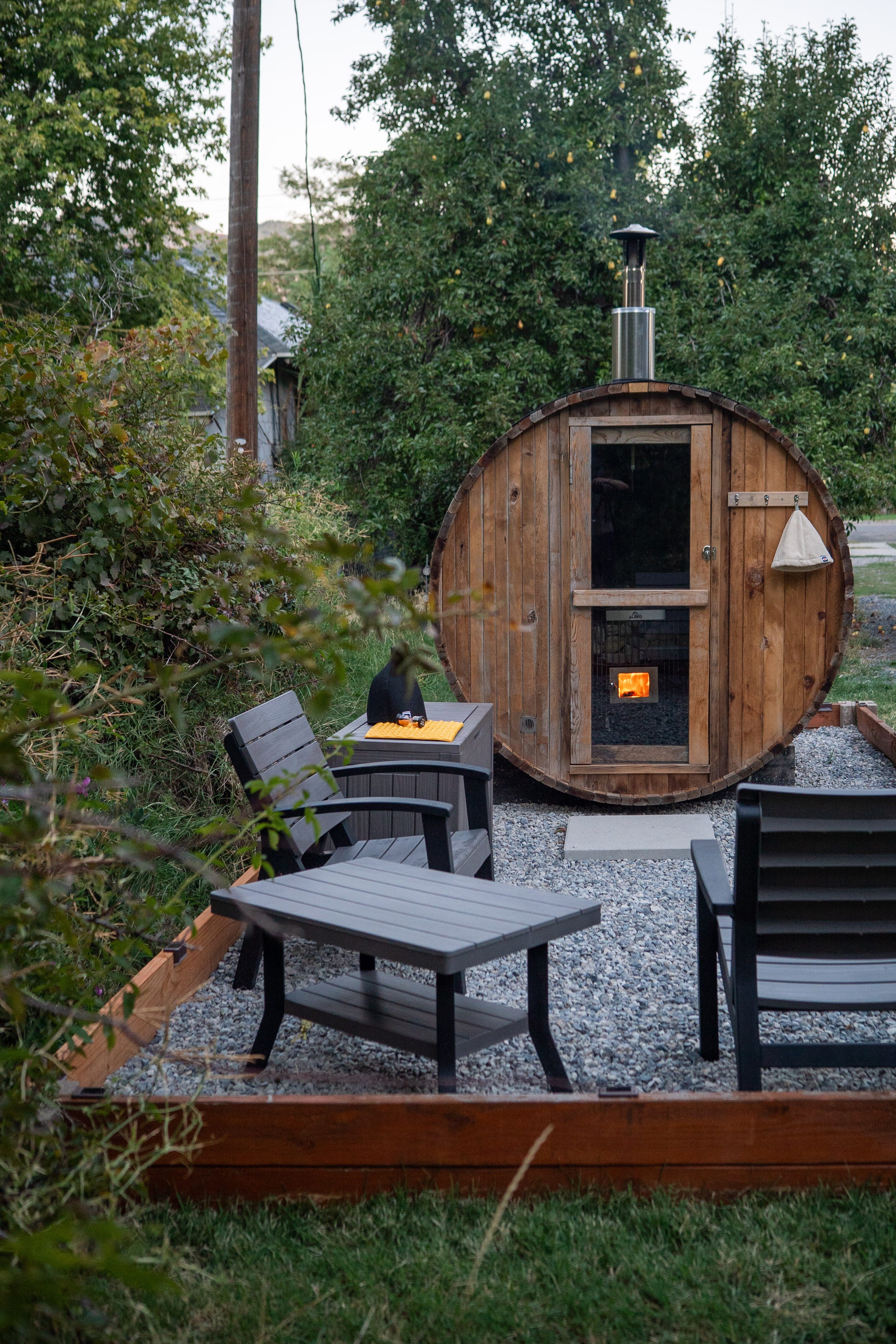
I stepped into the sauna around 8:10pm to a welcoming glow from the stove, and a pleasant 178 degree temperature. It’s getting cooler outside, so I’ll have to adjust my variables solve for the relative outside temp. I’m sure there’s an algebraic approach to take, but I’ll opt for the empirical one.
There was just enough light outside in the fading dusk light to permeate the glass door, dancing with the glimmer of the wood stove on the floor beside my feet.
I filled the water bowl and added a few drops of lavender oil, which brings a bright aroma when poured over the hot rocks that I pulled from the Ogden River. Over the weekend I was talking with an older gentleman and he reminded me that some rocks explode if they get too hot, but so far we haven’t had any catastrophes.
Outside, I hear a symphony. Not from the junior high down the road, or the sports complex up the hill, but from the crickets and cicadas in the surrounding foliage. This time of year they’re especially fortissimo. The longer you listen, the more sounds you can hear. After a few moments, I’m certain that there are at least 5 different melodies happening at once. It’s fascinating that they all keep their own rhythm and tempo, and even more-so that they inherently seem to harmonize.
This makes me curious…
What sets our tempo? Is it internal - biological, psychological? Or is it external - environmental, sensory?
Perhaps it’s an aggregate of all of the above.
(Part of me wonders if the crickets and cicadas have a faster tempo in this day and age, with all of the 5G and EMF’s in our vicinity than they did 50 years ago when land lines ruled the world. That’s as far as I’ll foray down the conspiracy road for now.)
It’s also interesting to consider, for a moment, where our output comes from. What is the “source”? In the west, there’s the prominent belief that we’re generating output from within ourselves - through will or drive. The belief that we are beings whom can exert ourselves physically, intellectually, or artistically to create something from within, and we are the source. Sure, we may get inspired by something - but ultimately, we do it.
However, another perspective to consider - and one that can have significant implications - is that maybe we’re not the ones in control. Perhaps we’re just a conduit through which a pre-existing “force” is passing, and like air through a flute, output - or music - happens. Not by our own will, but from some external force running through us. We’re just instruments.
This “force” is not a foreign concept.
Christians call it the holy spirit. Hindus call it the Brahman. The best description that I’ve found is through Taoism - namely, the Tao. (However, a true believer in tao would curse me for defining it) There also seems to be a more widespread adoption of “the universe” in the modern day, which strikes a similar chord as the Tao in my book. We see differences in their applications, but they’re all the same thing ultimately.
Accepting any of these concepts requires a remarkable amount of faith and trusting the unknown, but at the same time can bring a powerful sense of peace to ones existence.
A second thing I notice outside as I’m sitting in the sauna is that each type of insect seems to be playing the same note, or at least in the same key as their hundreds (possibly thousands) of counterparts within their species. It’s impressive. Are they physically replicated so similarly that they all make the same sound, and just that sound? Or are they actually capable of producing a spectrum of notes, but actively choose to play the same melody?
This raises the question, how can we be tuned - like instruments - to best resonate the energy that comes through us?
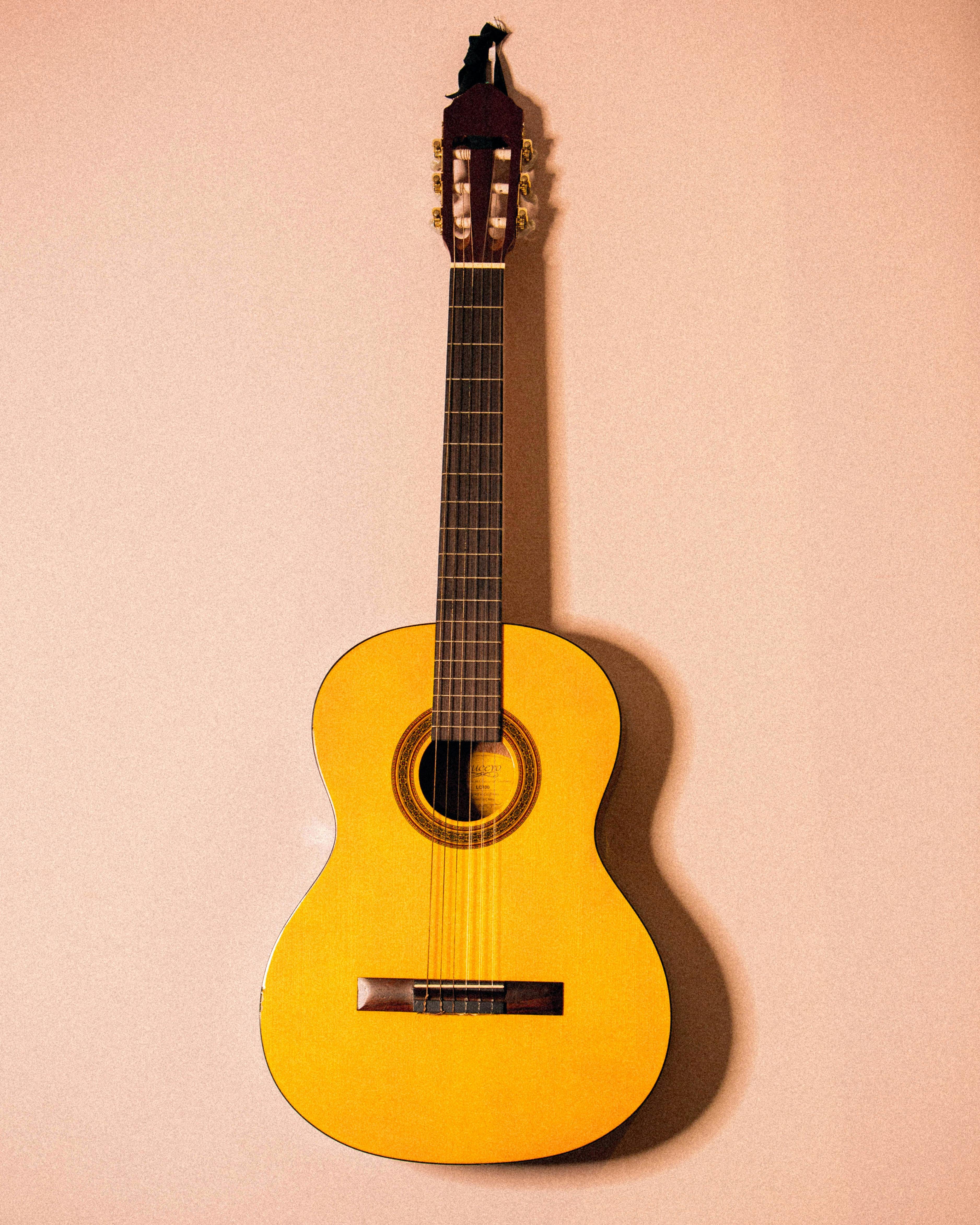
As I write this I’m looking over at my guitar on it’s stand - with frets, 6 strings, and knobs for tuning each one. If I leave it sitting long enough, or if there are large swings in temperature, it definitely needs adjusted. Otherwise, the output is off-key and out of harmony. I wonder if there’s a metaphor for the 6 strings of the human psyche? Emotional, physical, intellectual, logical, hedonism, and… hmm. I wonder.
The other thought that comes to mind while looking at my guitar is capacity.
Capacity, according to Oxford Language, has two definitions:
The amount that something can contain
The amount that something can produce
At first glance, these definitions might seem mutually exclusive. However, within the metaphor of an acoustic instrument, they are commensurate and correlative. Without the hollow space inside, the guitar’s capacity for producing sound is substantially less.
In similar thought, chapter 11 in the Tao Te Ching reads:
“Thirty spokes are joined in the wheel's hub. The hole in the middle makes it useful.
Mold clay into a bowl. The empty space makes it useful.
Cut out doors and windows for the house. The holes make it useful.
Therefore, value comes from what is there, but usefulness comes from what is not there.”
In that way, we have to examine the space within. A brief inquiry tells me that the space we have for resonance is directly correlated to our free time, but I’m sure physics would inform this further. Physics loves space and time.
So what of all this? I don’t necessarily have conclusions, but I do find myself resonating (no pun intended) with the lyrics of a favorite song by the Fleet Foxes: